
The FAMH archive is a resource for research and teaching. Here we share responses to it by students and researchers, drawing on the oral history interviews in their own writing, artistic practice and scholarship. We welcome new contributions: please get in touch at e.r.mitchell@leeds.ac.uk.
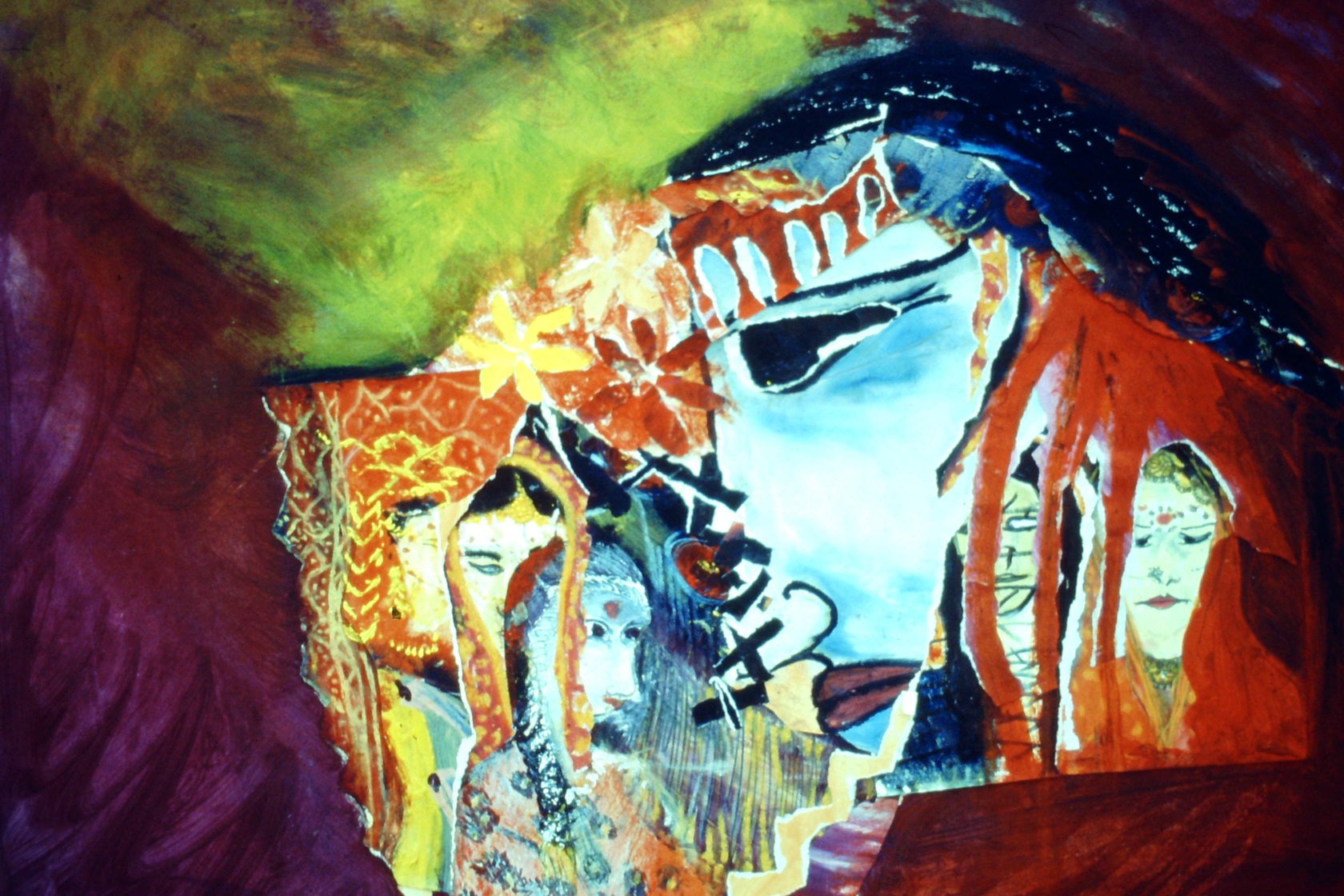
Image by Symrath Patti
Responses to the Archive

Women Artists in Wales by Emma Rowland
August 2026
Emma Rowland is an undergraduate student at the University of Leeds, working with the Feminist Art Making Histories team as part of the Laidlaw Scholarship and Leadership Programme. This summer she has been researching the lives and work of women artists in Wales, contributing to the wider research of the FAMH project. Inspired by the project’s podcast series, Feminist Art Lives, Emma produced and recorded her own episode using the FAMH interviews.
She also wrote a blog post about her archival research which you can find below.
The National Library of Wales: Uncovering Women Artists in Wales
By Emma Rowland, August 2026.
Emma Rowland is an undergraduate student at the University of Leeds, working with the Feminist Art Making Histories Team as part of the Laidlaw Scholarship and Leadership Programme.
This summer I am undertaking research about women artists in Wales, to form a part of the wider research conducted by the Feminist Art Making Histories team. Having grown up in Wales and received a Welsh medium education, I was already aware that Wales has a rich history in the arts, yet a lot of that history is often underrepresented and male oriented. For these reasons I was keen to research the lives and work of women artists in Wales to help recognise and celebrate their contributions to the arts in Wales. Following on from my research on Women’s Arts Association Wales, Christine Kinsey and Moira Vincentelli from the FAMH archive, I further explored the lives and works of these women in a recent trip to The National Library of Wales in Aberystwyth; using the following collections as resources: ‘Newsletter / Women's Arts Association = Cymdeithas Celfyddydau Menywod’, ‘Christine Kinsey’, ‘Christine Kinsey Women of Wales exhibition’, ‘Truth, Lies and Alibis’ and ‘Moira Vincentelli Papers’. This blog post shares some of my findings and reflections from my visit to the library.
Opportunities and representation
The topic of representation within art education is a prevalent theme within the experiences of the women interviewed in the FAMH archive, as I discovered listening to the first episode of the Feminist Art Lives podcast. I was interested to learn more about this issue in the context of Wales through Kinsey and Vincentelli’s experiences.
In a typewritten paper written in 1985 about her Women’s Art in Wales exhibition[1] Vincentelli mentions how in her survey of women artists in Wales, women found that the art college environment was ‘male-dominated and alienating’. Reading about Kinsey’s experiences at Newport College of Art, this undoubtedly seems the case. In her book Truth, Lies & Alibis[2], Kinsey recalls being told by a male tutor that she ‘was trying to run before I could walk’[3] and how male artists were abrasive about women being central figures in her work, dismissively remarking, ‘all you do is bang on about women’.[4]
Considering narratives about life in the South Wales valleys were predominantly from mens’ perspectives and experiences, and that there were no women tutors within the Fine Art department at Newport College at this time, Kinsey’s determination to continue producing work about Welsh women is a testament to her drive as an artist and feminist. I was interested to her approach of dealing with this backlash, as instead of ignoring dismissive opinions about her work, she used them as way of consolidating her own vision as an artist, ‘such comments did not dissuade me, and I did what I have always done: use men as a sounding board while saying to myself “Well, if this is what men think, what do I think?” which has made me ever more determined to follow my own path.’[5]
There was also a distinct lack of representation of women artists within art education, as at Kinsey’s time in Newport College no women artists were taught in the History of Art course. As a result, Kinsey recalls her surprise when learning about the artist Gwen Jones from her friend when she was at college[6]; she was surprised to hear of a women artist of international acclaim who was also Welsh. Being in her third year of college by this time, I was struck by the extent that women artists were underrepresented within art education. While sifting through boxes of images of Welsh artists captured by Bernard Mitchell[7], Kinsey was one of the few women included, this being a true testament to the lack of representation of women artists in Wales.
Sense of place
I also discovered more about women artists’ sense of place in the world of art, and the barriers they faced to overcome these restrictions. In her book Truth, Lies & Alibis Kinsey mentions how tutors at art college tried to dissuade her from specialising in painting as the design pathway was deemed more suitable for women.[8] Similarly, in her paper ‘Women’s Art in Wales Today’, Vincentelli explores how men and women artists’ roles in the art world are sort of microcosms for their designated roles in society. She noted how women tended to work with soft materials such as textiles and clay and used delicate and decorated surfaces whereas men were more likely to work with hard, undecorated surfaces and develop their work in metal and wood. I found it interesting to see the ways in which gender stereotypes present themselves in the art world, and how some materials and art forms are given gender archetypes and thus deemed unsuitable for women. It is perhaps a more overlooked barrier that women artists faced that demonstrates the lack of representation of women artists across art disciplines.
I was also interested to learn about how physical place affected women artists in Wales through an interview with North Wales based artist Maria Hayes in a Women's Arts Association Wales Newsletter from 2007.[9] Hayes noted that the isolation of living in a rural area was ‘a big problem’ that affected her social as well as financial life.
Collaboration
To many of the women interviewed in the FAMH archive, collaboration was and continues to be a huge part of their journey as artists and feminists. This is especially true for Women’s Arts Association Wales, an Association founded on a collective aim to bring women artists in Wales out of isolation. This sense of care and collaboration was evident in their newsletters[10], which featured a reoccurring ‘What’s New’ segment that spotlighted different women artists, who offered encouragement to other women. For example, Susan Richardson: ‘Don’t be put off by anything and follow your dreams. Don’t let anyone tell you not to do it’, and Jean Walcott, ‘Be absolutely determined to do what you want to do.’ I was struck by how passionate these women were about encouraging other women artists, but there’s also a sense that the underlying imperative nature of their encouragement also reflects the need for women artists to be bold and determined when facing the culture of male-domination and dismissiveness portrayed by Kinsey and Vincentelli in the art world.
Reading through their newsletters, I discovered how through initiatives such as seminars offering advice about funding and self-promotion, and the Digital Arts Workshops, the Association provided women artists with the self-sufficient skills they needed to gain greater independence and autonomy over their work and careers. It was inspiring to learn about the Association’s foundation of care and collaboration that allowed women to grow and thrive as artists in Wales.
[1] Vincentelli, M. 1985. Women’s Art in Wales Today. Unpublished.
[2] Kinsey, C. 2023. Truth, Lies & Alibis. Singleton Park: H'mm Foundation
[3] Kinsey, 2023, p.28. Truth, Lies & Alibis. Singleton Park: H'mm Foundation
[4] Kinsey, C. 2023, p.28. Truth, Lies & Alibis. Singleton Park: H'mm Foundation
[5] Kinsey, 2023, p.28. Truth, Lies & Alibis. Singleton Park: H'mm Foundation
[6] Kinsey, 2023, p.26. Truth, Lies & Alibis. Singleton Park: H'mm Foundation
[7] Mitchell, B. 1998. Christine Kinsey [Image]. At: The National Library of Wales
[8] Kinsey, C. 2023. Truth, Lies & Alibis. Singleton Park: H'mm Foundation
[9] Permanent Waves Women’s Arts Association. 2007. Interview – Maria Hayes. Newsletter Women’s Arts Association/Cymdeithas Celfyddydau Menywod. Available from: The National Library of Wales
[10] Permanent Waves Women’s Arts Association. Newsletter Women’s Arts Association/Cymdeithas Celfyddydau Menywod. Available from: The National Library of Wales
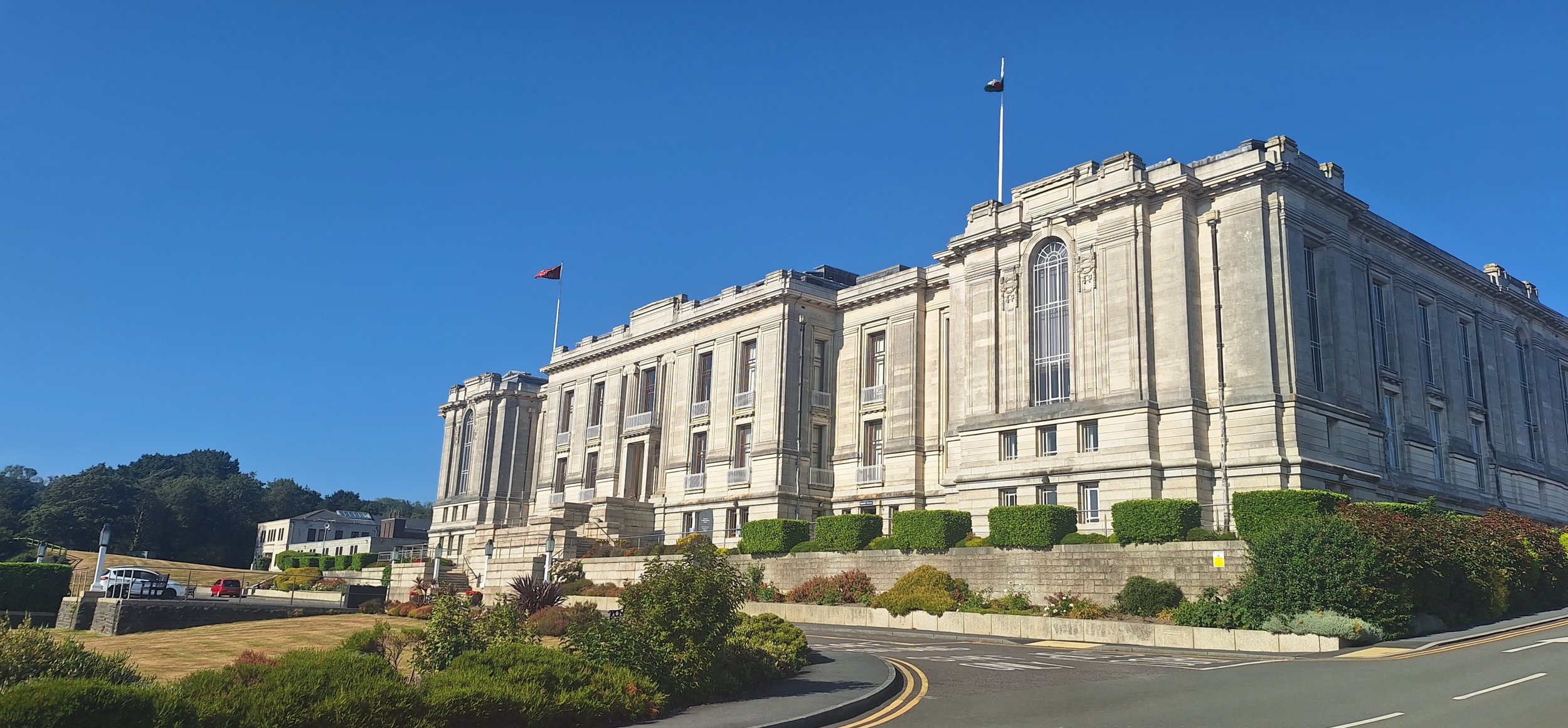
The National Library of Wales, Aberystwyth. Photo by Emma Rowland.
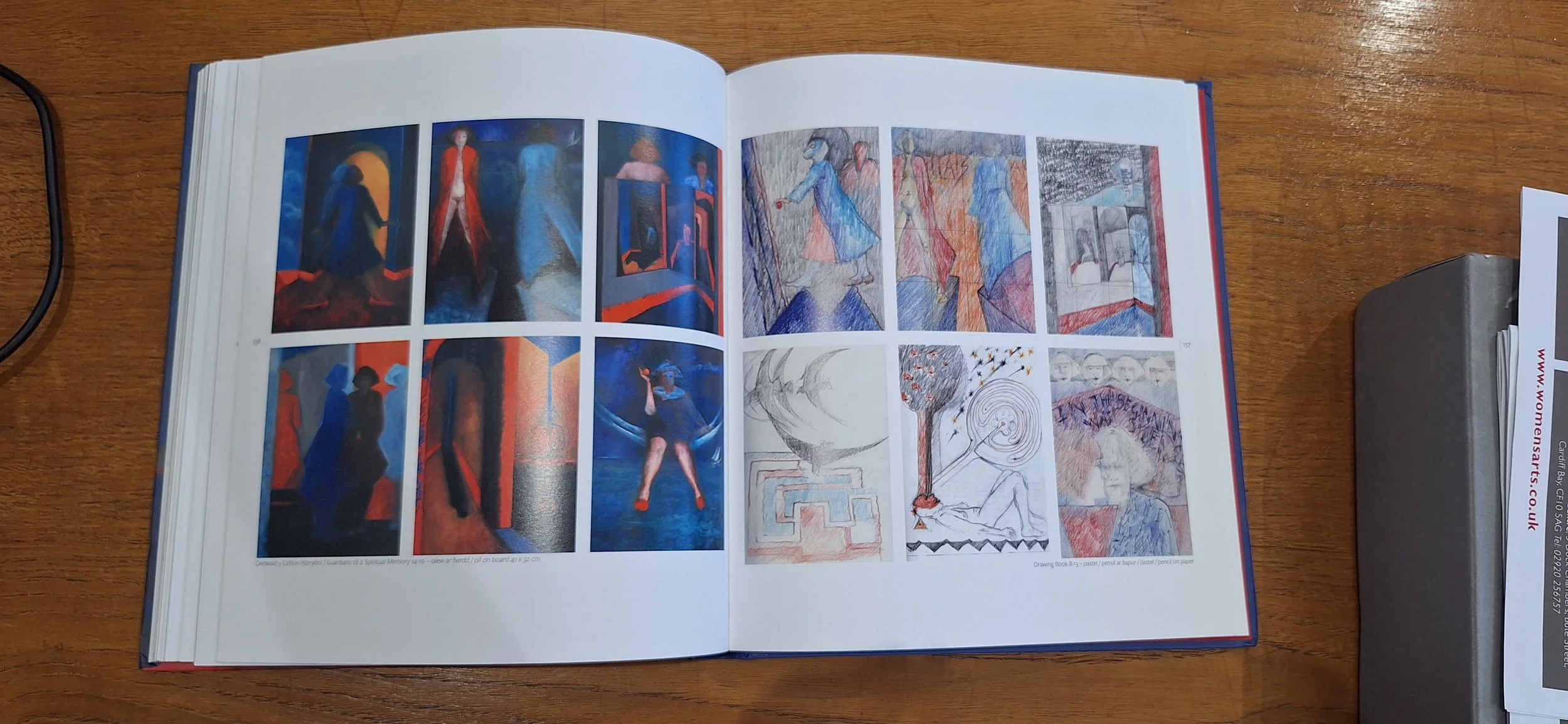
Image from ‘Truth, Lies & Alibis’. Photo by Emma Rowland.
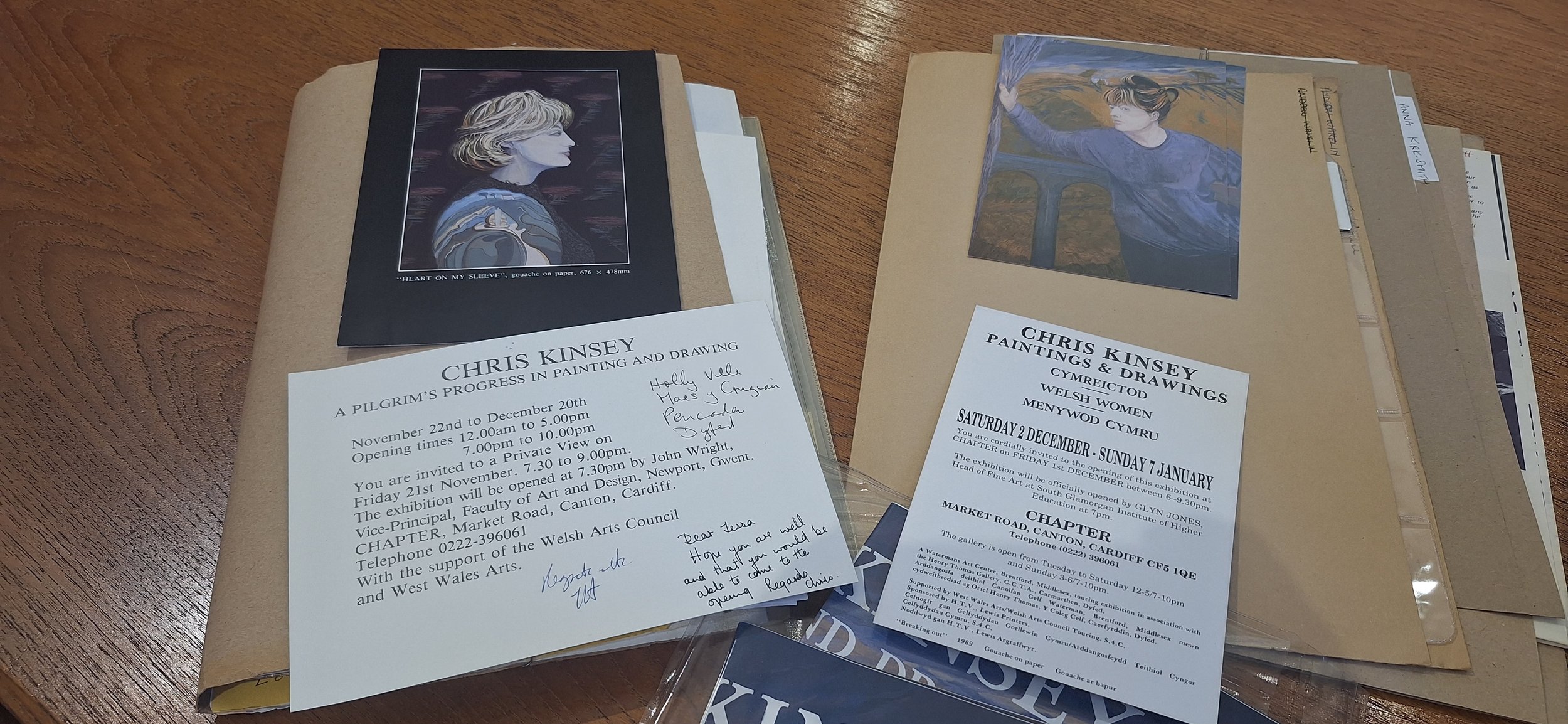
Image from the ‘Truth, Lies & Alibis / Images and Words byChristine Kinsey’collection. Photo by Emma Rowland.
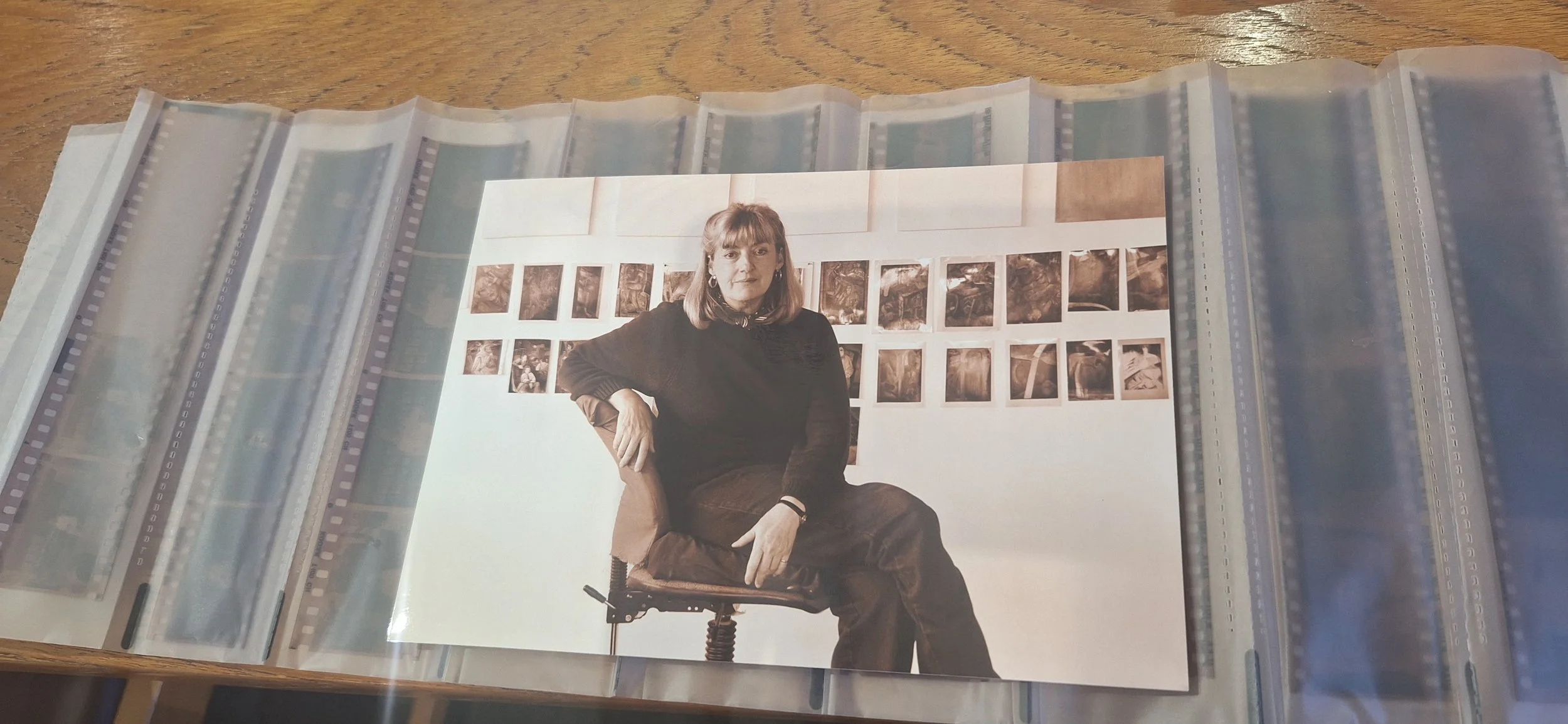
Image of Christine Kinsey. Photo by Emma Rowland.
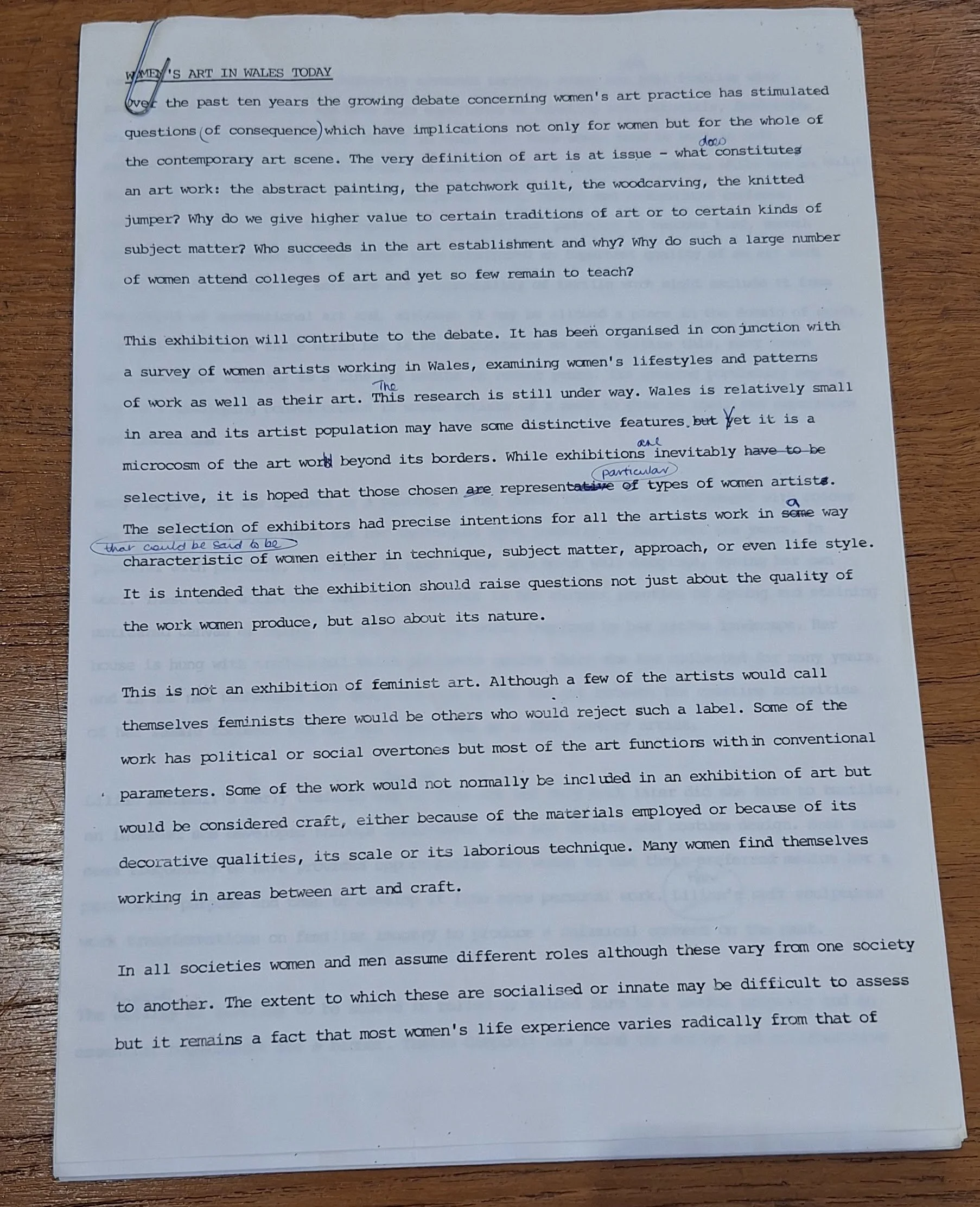
‘Women’s Art in Wales Today’ by Moira Vincetelli. Photo by Emma Rowland.
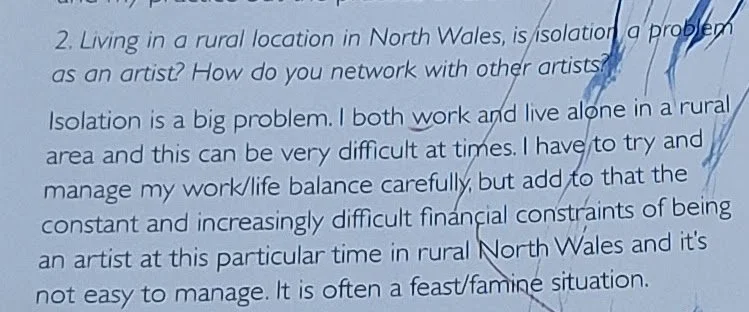
Interview with Maria Hayes. Photo by Emma Rowland.
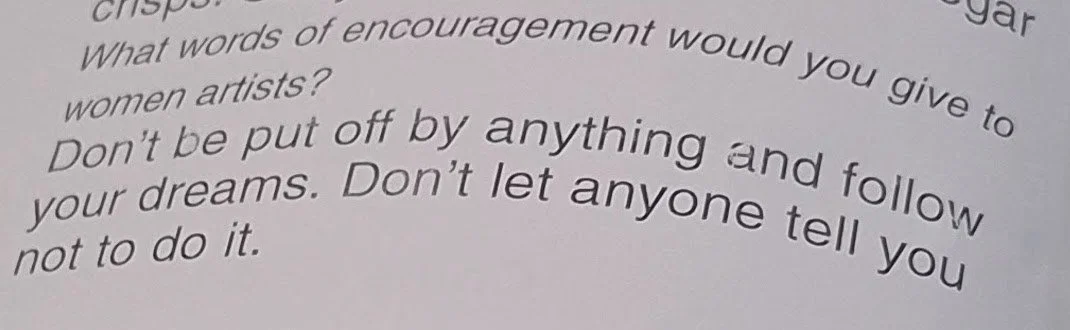
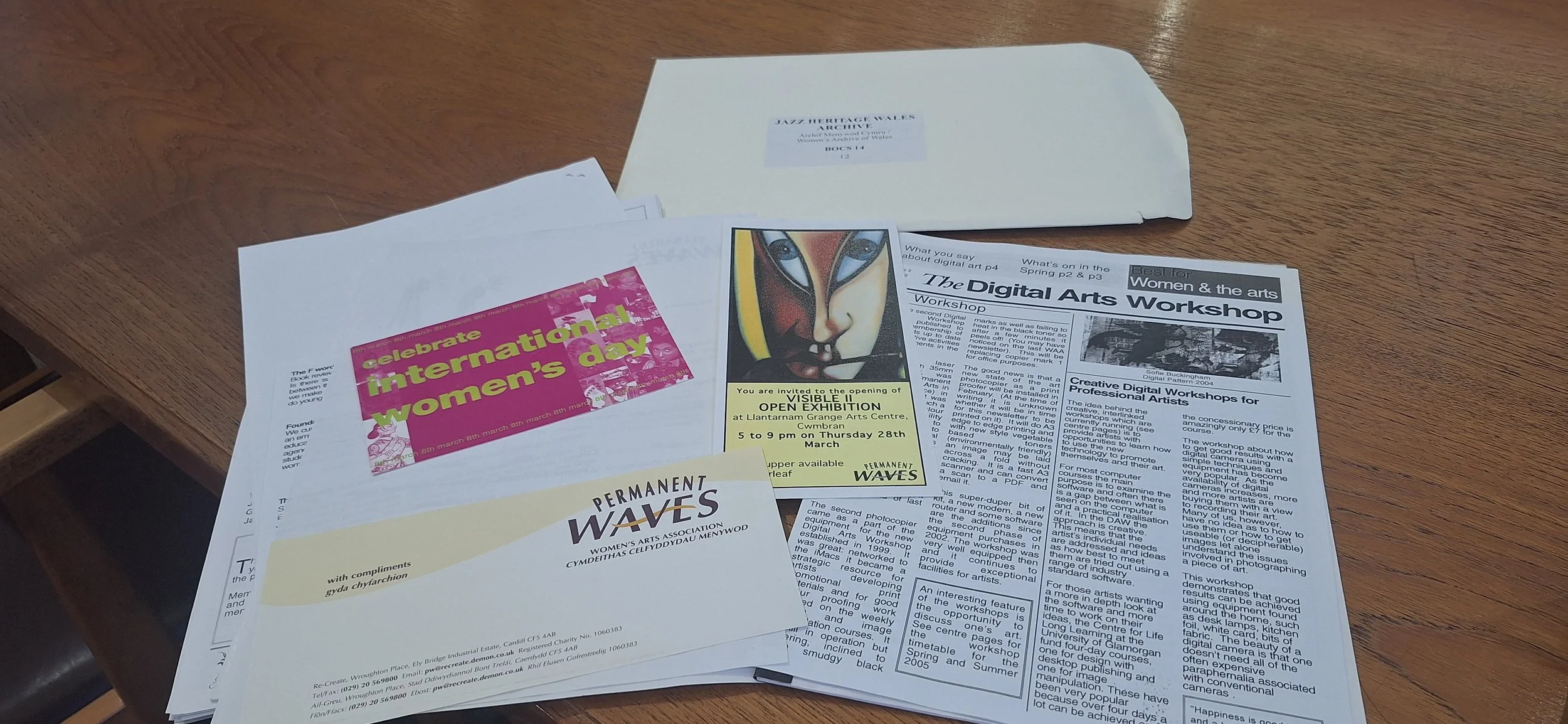
Women’s Arts Association Wales newsletters. Photo by Emma Rowland.